The company raises poultry and tracks indicators such as mortality, weight gain, and feed conversion. Before the system was implemented, actual results were not immediately compared with standard values, so deviations in the growing process became visible only after the fact, when the flock had already completed its production cycle.
ERP implementation • Agribusiness • Poultry farming
Automation of 100 workstations: how ERP unified operational and statutory accounting for the Pan Kurchak Group of Companies
The Pan Kurchak Group of Companies is one of Ukraine’s largest poultry producers, with a closed production cycle from parent stock breeding to finished products sold through its own retail network. Our team transferred all accounting for the poultry farming business into a single ERP system, implemented statutory accounting for both business units, and developed custom functionality that had not existed in the standard configuration — including a fixed asset tree.
📊 100 workstations
automated within a single project
⏱ End-to-end accounting built
operational accounting across the full poultry production cycle
🧩 2 business units
full statutory accounting implemented in parallel
Situation before the project
The company operates poultry farming, crop production, and feed manufacturing through two independent business units. This structure required a separate decision for each accounting area: whether to implement a unified process for both units or maintain two parallel accounting environments. Given the numerous accounting areas covered by the project, the scope was already substantial from the outset.
Agidel and Hubyn are not a single legal entity with two divisions, but two independent business units, each with its own statutory accounting environment. Procurement, sales, warehousing, payroll, and fixed assets had to be implemented separately for each unit while remaining within one system.
The equipment and vehicle fleet of a company of this scale require scheduled maintenance. Before hierarchical fixed asset accounting was implemented, the company did not even have a complete list of its equipment in a single system, let alone a planned maintenance schedule.
The company leases agricultural land from a large number of landowners across different villages. Before ERP implementation, accruals, deductions, and payments under these lease agreements were managed separately, creating additional administrative workload.
The project had to cover the full cycle — parent stock accounting, incubation, broiler growing, and feed production; statutory accounting for procurement, sales, warehousing, treasury, payroll, and HR for two business units; custom development of a fixed asset tree; and integration with several external services, including GPS trackers, Telegram, SM-POS, M.E.Doc, and FREDO.
Objectives and critical requirements
The request involved transferring all accounting processes for the poultry farming business into a single ERP system, consolidating operational and statutory accounting, and extending the subsystem with custom functionality during implementation.
1. Transfer all accounting processes into a single system

Consolidate operational and statutory accounting instead of relying on separate data sources for each production area.
2. Operational production accounting with actual vs. standard comparison

Build accounting for poultry farming, crop production, and feed manufacturing with the ability to compare actual production indicators against established standards.
3. Statutory accounting for two business units simultaneously

Implement the full statutory accounting environment for Agidel and Hubyn in parallel within a single database, without delaying one business unit for the sake of the other.
4. Development of fixed asset tree functionality

Build a hierarchical structure for equipment and vehicle accounting with repair planning — functionality not available in the standard configuration.
5. HR accounting and payroll calculation

Implement a complete HR accounting environment, including automated processing of primary documents such as sick leave certificates.
6. Systematization of settlements with landowners

Manage land lease agreements by landowner and village within a single system instead of maintaining fragmented records.
What our team did and how
Operational accounting for poultry growing
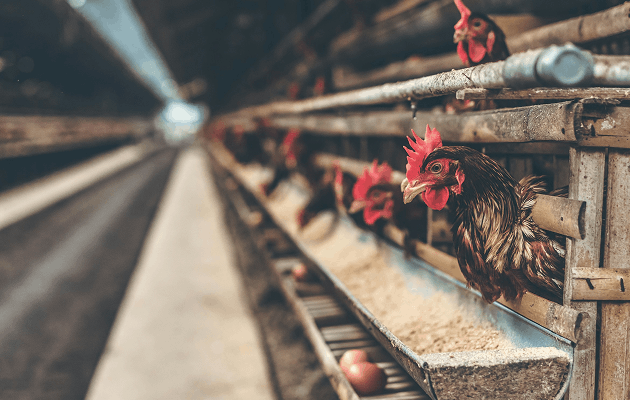
Operational accounting is based on two production records that track changes in the poultry population over time.
The parent flock record tracks mortality, bird selection, feed and water consumption, as well as vaccination and disinfection programs, with separate columns for standard and actual values for each indicator.
The broiler growing record follows the same logic for the fattening stage: number of birds at the end of the day, weight, average daily gain, feed and water consumption, and feed conversion per bird — again, with actual values shown alongside the standard.
This accounting structure is more than just an observation log.
Comparing actual and standard values for each indicator on a daily basis makes it possible to identify deviations during the growing process before they affect the final results of the flock and to pinpoint the likely cause — whether feed, ventilation, or the vaccination schedule — instead of investigating it retrospectively after the production cycle has ended.
The production record is also connected with related operational accounting documents: a poultry transportation schedule containing the route, vehicle or trailer, destination, number of crates, and placement batch; and a planned growing cost calculation that links the poultry house, placement batch, placement and slaughter dates, production record, energy consumption, and lighting schedule within a single document.

Custom development of the fixed asset tree
The standard configuration of the selected ERP system did not include a tool for building a hierarchical fixed asset structure with repair planning. We developed this functionality from scratch specifically for a company with such a large volume of equipment and vehicles.

Customization result
The company can now manage fixed assets not as a flat list, but as a structured tree, with subordinate assets recorded for each unit, including low-value and rapidly wearing items, as well as planned repairs and spare-part replacements for equipment and vehicles.
This development is directly connected with operational accounting: the same planned maintenance logic implemented for production equipment also applies to the vehicle fleet used in poultry transportation. As a result, the fixed asset tree is not an isolated module, but part of the same integrated environment as production accounting.
Statutory accounting for two business units simultaneously
The biggest organizational challenge of the project was to implement a complete statutory accounting environment not for one company, but for two independent business units in parallel — within the same project timeline and allocated budget of hours. For Agidel and Hubyn, we deployed accounting environments with the same functional structure but separate data. The data architecture was designed so that the two business units would remain clearly separated within a single database while still supporting consolidated management reporting for the group of companies.
Procurement and sales

Wholesale and retail sales, as well as procurement of raw materials and supplies for both business units.
Production

Accounting for feed production and poultry products, including toll manufacturing processes.
Warehouse, treasury, and finance

Warehouse accounting, treasury, fixed assets, capital investments, loans, and VAT accounting.
Payroll, HR, and resources

Payroll calculation, HR accounting, and accounting for energy resources, transport, and fuel.
HR accounting and payroll with automated sick leave import
HR accounting and payroll calculation were implemented using standard ERP logic, supplemented with custom processing for one of the most routine processes — sick leave accounting.

Instead of manually entering data from each electronic sick leave certificate, we developed a process that imports a batch of sick leave records from a file — including start and end dates, sick leave number, incapacity case number, and employee surname — and automatically creates the required documents in the system.
For a company with around 100 workstations and, accordingly, a regular flow of sick leave certificates, this eliminated one of the most time-consuming manual HR accounting processes.
Settlements with landowners by village
The company’s crop production relies on land leased from a large number of landowners across different villages, so accounting for these relationships was separated into a dedicated functional area.
We implemented the “Settlements with Landowners by Village” report, which shows, for each company and land lease agreement, the current balance, validity period, registration number, lease amount, as well as calculations of accruals, deductions, payments, and the target balance for each specific agreement.
This transformed land lease accounting from fragmented records for individual landowners into a structured system where every accrual or payment can be traced to a specific agreement and village.

Crop production and third-party service accounting
For crop production, we implemented document flow for writing off seeds, fertilizers, and plant protection products linked to a specific field, crop, and write-off category — for example, applying organic fertilizers to a particular crop.
In parallel, we implemented accounting for services provided by third-party organizations: field operations, types of work, transportation services, and fuel and lubricants, linked to machinery, an order, a counterparty, and a contract.
Both documents serve the same purpose — accurate allocation of material and service costs to a specific crop and field, which later provides the basis for correct crop production cost calculation.
Integrations with external services
The final part of the project involved enabling data exchange between the ERP system and services the company had already been using before implementation:
◻ Client-Bank,
◻ Telegram,
◻ GPS trackers for vehicles,
◻ SM-POS for retail operations,
◻ M.E.Doc,
◻ FREDO for document management.
Instead of forcing the company to abandon familiar tools in favor of a single system, our specialists implemented integrations that allowed these services to remain in day-to-day use, while ERP became the central environment where data from all of them is consolidated.

Results
Scale of automation

100 workstations were automated across 13 months of team work on the project, covering both operational and statutory accounting for two business units.
Operational poultry farming accounting

The poultry growing and maintenance records provide a daily comparison of actual values against standards for mortality, weight gain, and feed conversion — instead of assessing results only after the growing cycle has been completed.
Statutory accounting

Both business units received a complete and parallel accounting environment for procurement, sales, warehousing, treasury, payroll, and fixed assets within a single system.
Fixed assets

Custom fixed asset tree functionality made it possible to plan equipment and vehicle repairs — something that had previously been done manually in the company.
External services

Data from Client-Bank, Telegram, GPS trackers, SM-POS, M.E.Doc, and FREDO is consolidated in ERP without requiring users to abandon the tools they already use in their day-to-day work.
Settlements with landowners

Land lease agreements are managed systematically by village, with detailed calculations of accruals, deductions, and payments for each agreement.
Areas of automation
Implementation of operational production accounting

Parent flock accounting, broiler growing, incubation, egg output, veterinary medicines and disinfection, feed manufacturing, poultry production, incubation, energy resources, poultry houses, and technological poultry growing records.
Implementation of statutory accounting for two business units

Procurement, wholesale and retail sales, feed production, poultry products and toll manufacturing, warehouse accounting, treasury, payroll, crop production, transport and fuel, settlements with landowners, fixed assets, capital investments in construction, bank loans, VAT, and energy resource accounting.
Development and implementation of custom fixed asset tree functionality

Planned repair accounting and spare-part replacement, with fixed asset locations tracked by responsible employee.
Implementation of HR and payroll accounting
HR accounting, payroll calculation, and automated import of electronic sick leave certificates.