ERP Implementation by CBPM Service

Guaranteed ERP Implementation: Balancing Standard Functionality and Custom Development

A sprint-based methodology, a transparent scope of work with minimal deviations, and continuous progress monitoring give you clear visibility and control at every stage. We will also help you select the optimal solution for your business or ensure a smooth migration between systems.

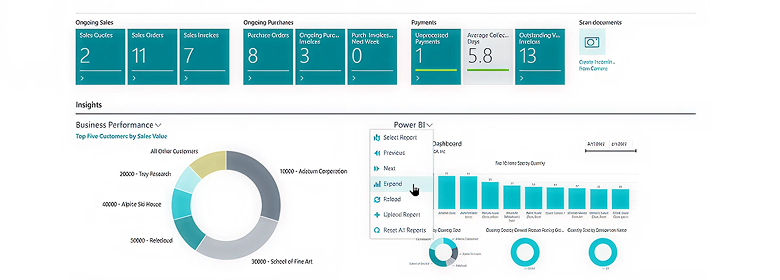
Microsoft Dynamics 365 business management dashboard
25 Years

of ERP Automation Experience

200+

Completed Projects Across 12 Industries

Official Microsoft Partner

Hybrid Expertise

BAS and Microsoft Dynamics 365 Business Central

Why Companies Choose ERP Systems for Business Management

Advanced ERP technologies provide complete transparency in management accounting and maximum accuracy in strategic business planning. Through full digitalization, companies minimize the risk of human error and gain highly reliable analytics. This creates a solid foundation for attracting major foreign investment.

Full visibility into your operations, with automated analytics for instant decision-making

Business analytics bar chart icon

Rapid adaptation to market changes and the complete elimination of duplicate work across departments

Document archive box icon

Business Central includes a built-in audit trail, simplifying Big Four audits, financial reporting preparation, and collaboration with investors

Business documents icon

Twice-as-fast order processing and instant reservation of warehouse inventory

Cardboard shipping box icon

Elimination of human error and process failures

Chain link icon

Simplified business scaling and branch expansion

Payroll automation icon

Transparent IFRS-compliant reporting to help attract major foreign investment faster

Toolbox icon

Our Services

Out-of-the-Box Business Central Implementation

Full-cycle implementation and configuration of finance, procurement, sales, logistics, and inventory management modules in line with the company’s business processes. Creation of a unified operational environment for controlling finances, accounting, and cost management.
Request a Service
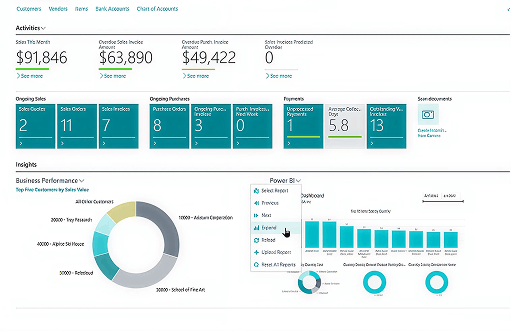
Business analytics and financial dashboard

Migration from Other ERP Systems

Secure migration to an ERP system with the transfer of master data, balances, and business data using proven validation scenarios. Complete migration away from software of Russian origin or with Russian ties, including 1C / BAS, without interrupting business operations.
Request a Service
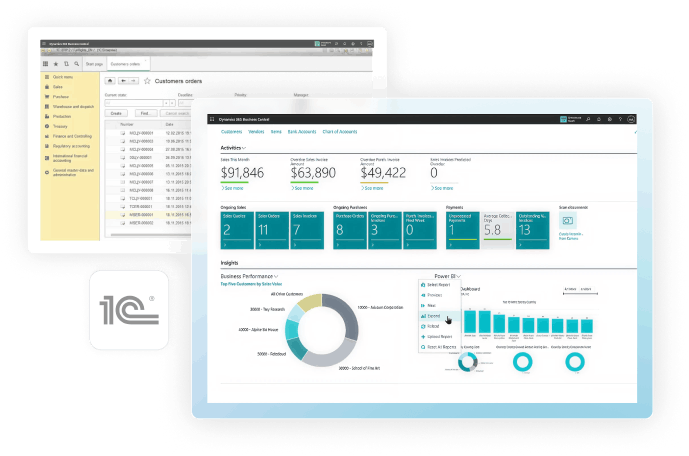
1C business management software interface

ERP System Customization

Adaptation of standard ERP functionality to the unique needs of the business. This includes business process configuration, operations automation, integration with external services, reporting setup, and development of additional modules to improve company efficiency.
Request a Service
Custom business software dashboard

ERP System Support

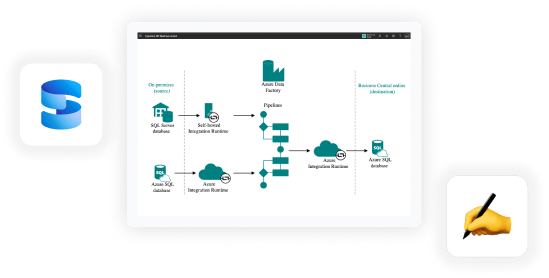
Prompt incident resolution in accordance with clearly defined SLA procedures and regular module updates to reflect changes in Ukrainian legislation. SQL database performance monitoring, infrastructure administration, and optimization of user access rights.
Business software support interface

How CBPM Service Ensures High-Quality ERP Implementation

We thoroughly analyze every potential implementation risk before the project begins to ensure it is fully and reliably addressed. The project is delivered according to a clear methodology, with every stage coordinated with the client.

Agile Sprints

During ERP implementation, activities are divided into sprints with functionality delivered step by step. This makes it possible to test processes gradually, introduce adjustments quickly, and reduce risks during system launch.

Guaranteed Implementation

We build the implementation process around clearly defined stages and transparent responsibilities, enabling progress tracking without disrupting production while supporting the client’s team throughout the entire implementation journey.

Pre-Sales Analysis

Before signing the contract, we conduct a technical audit of the IT architecture, define the project scope and boundaries, and develop a system concept with a preliminary roadmap.

Hybrid Expertise

More than 25 years of ERP implementation experience across different platforms, combined with deep practical expertise in Microsoft Dynamics 365 Business Central, 1C, BAS, and Odoo.

Industry Experience

Experience implementing ERP systems across multiple industries, including retail, distribution, manufacturing, and the service sector.

Balance Between Standard and Custom Functionality

We design business processes around the Microsoft Core foundation. This minimizes custom code and significantly simplifies future software updates.

Post-Launch Support

Mandatory technical support and on-site consultant assistance during the first month-end closing after the system goes live.

Projects We’re Proud Of

Over 200 successful implementations across industries and businesses of different sizes.
95% of our clients recommend us. 25 years of experience.

View All Case Studies

Who Should Migrate to Microsoft Dynamics 365 ERP

Timely and professional ERP implementation is essential for companies seeking to build a transparent, European-standard corporate structure, attract major investment, and eliminate technological limitations.

Planning an IPO or Attracting Foreign Investment

Business Central has a built-in audit trail: every change to each document is recorded, making unnoticed adjustments impossible. This helps ensure transparent and reliable reporting for Big Four audits.

Opening or Already Operating International Divisions

Business Central lets you manage accounting in multiple currencies, support EU tax requirements, and automate intercompany document flows across different entities.

Part of Critical Infrastructure

Using prohibited software can create compliance risks and lead to scrutiny from regulatory authorities. Microsoft Dynamics 365 Business Central eliminates this dependency and provides a modern, compliant alternative.

Company Established After 2022

New companies can build their operational processes on a modern ERP platform from the outset, without relying on outdated systems, manual accounting, or accumulated technical limitations.

Scaling or Entering New Market Segments

Legacy software is not designed for operations across multiple countries. Business Central supports multiple currencies, local accounting requirements, and a unified database for all business units.

Going Through M&A, a Merger, or Restructuring

The flexible architecture of Business Central makes it possible to quickly integrate new companies into a unified financial and operational system.

ERP Implementation Methodology and Process

Most challenges in ERP projects are not caused by the system itself, but by the implementation approach. With 25 years of experience and more than 200 projects delivered, we have refined our own methodology. Here is how it works.

1. Pre-Project Assessment

Search and data analysis icon

We conduct a series of interviews with users across all business areas targeted for automation and document processes and requirements in detailed session notes. We model the processes using the standard system configuration and validate the proposed process flows with the client. Based on the Fit-Gap analysis, we identify gaps between business requirements and standard functionality, prepare the technical specification, and assess the feasibility and value of each customization.

2. Project Schedule and Roadmap

Office printer icon

Following the Discovery phase, CBPM Service specialists present the client with the future system model, technical specification, project estimate, and implementation approach. We agree on the project schedule and roadmap with the client and project team before implementation begins.

3. Migration Scope Alignment

Digital transformation magic wand icon

CBPM Service analysts define the list of data objects, migration format, and migration sequence, and agree on these with the client.

4. Configuration and Development

Business analytics bar chart icon

The implementation follows a sprint-based methodology. We hold coordination meetings every two weeks, and meet with the project sponsor monthly without exception. We carry out all customizations strictly per the approved technical specification and demonstrate the finished functionality to the client.

5. Initial Training

Training and education icon

We provide initial training for the client’s team so that users can work with the system and validate it against their own business processes.

6. Migration to the Test Environment

Computer workstation icon

We process master data and product catalogs separately from opening balances, including inventory, cash and other financial balances, customer and supplier settlements, and payroll. Before migration, we perform data mapping and clean up outdated or obsolete information. Our experts export data using specialized scripts as of an agreed date and transfer the approved scope to the test environment.

7. User Acceptance Testing and Refinements

Business partnership handshake icon

The client works with the new system during user acceptance testing (UAT). Depending on the results, we either proceed directly to production or document the list of required improvements and refinements.

8. Go-Live and Support

Air travel and transportation icon

We implement the agreed refinements and confirm the system’s readiness for production. We then move operations to the new system. Our consultants support the client’s team during the first reporting-period closing, identify any issues, and promptly resolve deviations. Further support and maintenance are provided in accordance with the agreed SLA.

Planning a Transition from 1C to a Modern ERP System?

Move from 1C to a modern, world-class ERP platform with support for Ukrainian accounting and tax reporting.

Assess Your Readiness to Migrate
  • Data and business logic preservation

  • Parallel operation of both systems during the transition

  • Team training included

What Motivates Ukrainian Businesses to Look for New ERP Solutions

Outdated tools can significantly slow down a company’s growth, while modern ERP technologies give management full and transparent control over the company’s finances and resources. This helps eliminate management bottlenecks and accelerate decision-making.

Request a Technical Audit

Problem

Inventory discrepancies, delays in order picking, and a lack of up-to-date data lead to downtime and financial losses. Stocktaking takes weeks, while shortages are often discovered only after a shipment has already been disrupted.

What Business Central Provides

WMS-enabled bin management, automated picking route optimization, and real-time tracking of goods in transit.

Problem

When data is transferred manually between Excel spreadsheets, it can be lost or duplicated. No department can be certain that it is working with up-to-date information.

What Business Central Provides

A single source of truth where creating a sales order automatically reserves inventory in the warehouse and generates an invoice without any manual data duplication.

Problem

The business owner is forced to personally approve minor payments because the process can’t be trusted. Delegating financial decisions without a reliable control system creates a risk of misuse or errors.

What Business Central Provides

A configurable approval matrix in the Workflow module based on transaction amounts, financial responsibility centers, and expense categories.

Problem

Managers spend up to 40% of their working day manually completing repetitive documents. Day-to-day operational tasks consume resources that should be directed toward strategic priorities.

What Business Central Provides

Document templates, automated recurring invoicing, and automatic order creation.

Problem

Collecting source documents creates chaos and stress for the accounting team. Data is scattered, some documents are missing, and every audit turns into a stressful project lasting several weeks.

What Business Central Provides

The system is designed from the outset around strict principles of transparent and easy-to-understand financial auditing. Every transaction is fully traceable, and a complete audit trail is generated automatically.

Problem

The on-premises database is not designed for large-scale operations. Multi-currency accounting, the simultaneous operation of multiple legal entities, and high transaction volumes lead to system failures and reduced performance.

What Business Central Provides

Automatic horizontal scaling of Azure cloud resources during peak workloads, without performance degradation or intervention from the IT team.

What Determines the Success of an ERP Project: Shared Responsibility for the Outcome

Successful ERP projects are built on several shared commitments from the client, which we discuss before the project starts to ensure it stays within the agreed budget and timeline. Each requirement is based on a specific lesson learned from previous projects and has helped save the client’s budget.

Roles and Responsibilities

The client assembles its own project team, including appointing a key user and a project sponsor. The roles of all participants must be clearly defined: who is responsible for the budget, who makes decisions about scope expansion, and who is responsible for completing specific tasks.

Coordination Meetings

Regular coordination meetings ensure that both parties have a shared understanding of the project status, budget, and workstreams. We hold a status meeting every two weeks and a monthly meeting with the project sponsor to align on overall progress and further development priorities.

Project Management

Our project methodology explicitly allocates time and budget for project management activities, including planning, execution monitoring, and meeting documentation. This ensures continuous task oversight and adherence to deadlines. On the technical side, we support the project with scheduled maintenance activities, including documenting configuration changes and managing releases.

A sprint-based approach combined with these practices is the foundation for successful project delivery

Client Team Involvement

We prepare and agree on a resource allocation plan for the client’s specialists and require adherence to it. The plan specifies which specialist is needed and what percentage of their time should be allocated in a particular month (for example, 50%). This prevents project downtime and helps maintain the agreed timeline.

Motivation of the Client's Team

The client approves an internal incentive policy for its project team based on the results of the ERP implementation. Projects are significantly more effective when the client’s internal team clearly understands how their motivation is tied to the achieved outcome.

Timeline Discipline

If the client delays the agreed schedule by more than 30 days due to reasons within their control, the cost of the remaining work automatically increases by 30%. The purpose of this rule is not to generate additional revenue, but to keep the project within the agreed budget, scope, and timeline.

Downtime Compensation

If the implementation team is unable to work due to delays on the client’s side, this downtime is charged at a coefficient of 0.7 of the previously estimated workload. The team is dedicated specifically to the project, and its capacity has been reserved in advance.

Mutual Guarantees from the Implementation Partner

If the client fulfills these commitments, we guarantee compliance with the agreed timeline on our side. Otherwise, reciprocal penalties apply.

Solutions

Each industry has its own process nuances and its own critical pain points. Over 25 years, the CBPM Service team has gained experience no amount of general ERP knowledge can replace.

Manufacturing, raw material accounting, MRP, shift planning

Payroll automation icon

Agribusiness Seasonal planning, land accounting, machinery

Agriculture and grain icon

Infrastructure and Utilities Assets, regulatory reporting, utility services

Toolbox icon

IT companies Billing, project accounting, resource management

Computer workstation icon

HoReCa Warehouse, costing, chains of establishments

Restaurant and dining icon

Machine building, serial and individual production

Business process settings icon

Metalworking Standardization, process sheets, balances

Delivery and logistics truck icon

Trade Pricing policy, store network, revaluations

Retail shopping bags icon

Energy Technical accounting, regulator, long-term assets

System integration connector icon

Metalworking Standardization, technological cards, balances

Process speed and automation icon

Construction Project accounting, subcontracting, materials

Home icon

Food industry Recipes, shelf life, HACCP

Food and grocery icon

Tell us about your project

    We respond within
    24 hours on business days

    1. Inquiry

    Leave your contact details and briefly describe your situation, including your current system, number of users, and the issues you would like to resolve.

    2. Introductory Call with a Manager

    A 30-minute conversation to discuss your pain points, timeline expectations, and the project delivery approach so we can select the right team for your needs.

    3. Pre-Project Discovery

    A technical audit of your IT architecture, definition of the project scope and boundaries, development of the system concept, and preparation of a preliminary roadmap.

    4. Proposal

    A detailed document outlining the scope of work, timeline for each project stage, and estimated cost.

    Frequently Asked Questions

    Narrowly specialized systems usually focus only on individual processes — for example, customer interactions, sales, or marketing. In contrast, an ERP solution combines finance, logistics, warehouse, procurement, manufacturing, and other business processes in a single system. This ensures end-to-end control, data transparency, and synchronized operation of all company departments within a single digital environment.

    Custom ERP development from scratch creates a strong dependency on programmers and requires years to test the core architecture. The ready-made Microsoft Dynamics 365 Business Central solution already contains thousands of configured processes, is regularly updated by the vendor, and ensures absolute core stability.

    The main risks of implementing an ERP system are unclear project boundaries and low involvement of top management. To minimize these factors, we conduct an in-depth pre-project assessment and document the requirements in the Scope of Work. Phased module deployment using the Agile methodology significantly reduces the workload on the team.

    Business Central supports Ukrainian accounting and tax reporting through localization and additional solutions for the Ukrainian market. This allows companies to work with a modern international ERP system without losing compliance with local accounting and reporting requirements.

    A standard ERP implementation typically takes anywhere from a few months to six months, depending on the company’s scale. Using a proven Agile methodology allows the first operational ERP platform modules to be launched within just a few weeks after the start. This ensures a smooth and comfortable transition of all employees to the new software.