
Microsoft Dynamics 365 Business Central
Cloud ERP into which 1C/BAS data and required customizations are migrated
Complete Technological Transition to International Management Standards
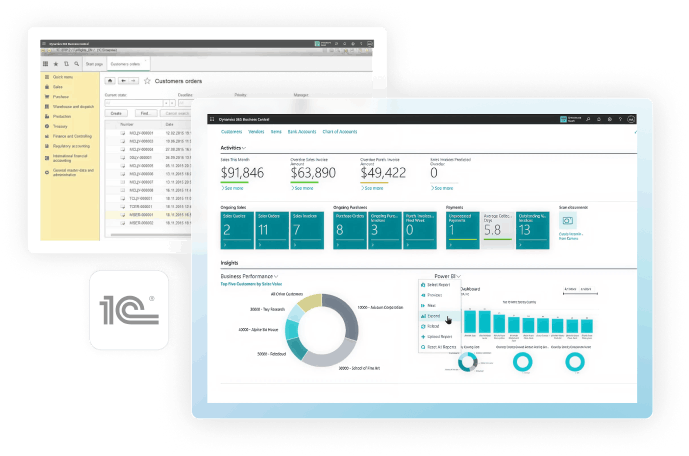
Migrating from 1C to Microsoft Dynamics 365 Business Central provides your company with a modern international ERP platform featuring support for Ukrainian accounting and a cloud architecture. Business Central brings together control over finance, logistics, purchasing and operations, scales with your business and integrates with the Microsoft 365 ecosystem. We carry out migrations for small, midsize and large businesses, as well as for state-owned and municipal enterprises, a sector where we have already implemented accounting software and ERP systems. We define the scope and sequence of each migration individually.

Official Microsoft Partner
of ERP Automation Experience
Completed Projects Across 12 Industries
BAS and Microsoft Dynamics 365 Business Central
We'll Help You Choose the Right System
Request a Consultation 

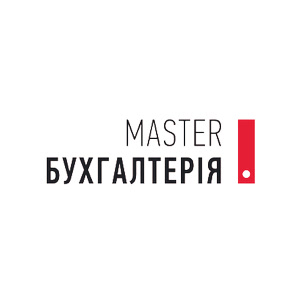
Outdated tools significantly slow down company growth, while modern ERP technologies provide management with complete and transparent control over the company’s finances and resources. This helps eliminate management delays and accelerate decision-making.
Balance consolidation takes weeks because bank statements are reconciled manually and data is spread across separate spreadsheets. Management doesn’t see the actual cash-flow position until 10–15 days later, after some decisions have already been made.
Automated bank statement imports, instant cost calculation, and a complete financial period close within three days.
Inventory discrepancies, delays in order picking, and a lack of up-to-date data lead to downtime and financial losses. Stocktaking takes weeks, while shortages are often discovered only after a shipment has already been disrupted.
WMS-enabled bin management, automated picking route optimization, and real-time tracking of goods in transit.
When data is transferred manually between Excel spreadsheets, it can be lost or duplicated. No department can be certain that it is working with up-to-date information.
A single source of truth where creating a sales order automatically reserves inventory in the warehouse and generates an invoice without any manual data duplication.
The business owner is forced to personally approve minor payments because the process can’t be trusted. Delegating financial decisions without a reliable control system creates a risk of misuse or errors.
A configurable approval matrix in the Workflow module based on transaction amounts, financial responsibility centers, and expense categories.
Managers spend up to 40% of their working day manually completing repetitive documents. Day-to-day operational tasks consume resources that should be directed toward strategic priorities.
Document templates, automated recurring invoicing, and automatic order creation.
Collecting source documents creates chaos and stress for the accounting team. Data is scattered, some documents are missing, and every audit turns into a stressful project lasting several weeks.
The system is designed from the outset around strict principles of transparent and easy-to-understand financial auditing. Every transaction is fully traceable, and a complete audit trail is generated automatically.
The on-premises database is not designed for large-scale operations. Multi-currency accounting, the simultaneous operation of multiple legal entities, and high transaction volumes lead to system failures and reduced performance.
Automatic horizontal scaling of Azure cloud resources during peak workloads, without performance degradation or intervention from the IT team.
A comprehensive migration from 1C transfers the company’s business processes into a unified ERP system with interconnected functional modules. Existing business logic is preserved and automated through system workflows and triggers, helping minimize human error, duplicate operations, and repetitive tasks.

Ukrainian localization supports VAT accounting, tax invoices, registration in the Unified Register of Tax Invoices, and integration with M.E.Doc in accordance with Ukrainian Accounting Standards.

Treasury management, liquidity control, payment planning, financial forecasting, management P&L, and balance sheets within a single system.

Reorder point calculation, automated generation of supplier requests, and three-way matching of invoices against purchase orders and goods receipts.

Price list management, automatic inventory reservation for customer orders, and real-time accounts receivable monitoring.

Bin-based storage, barcode management, cross-docking, and real-time tracking of goods in transit.
Bill of materials management, accurate batch cost calculation, defect control, and production capacity planning.
Import and export of payment orders through online banking (client-bank) systems, settlement control with counterparties, and support for fiscal operations.
Timesheet management and calculation of vacation pay, sick leave, and bonuses in accordance with Ukrainian legislation, including statutory reporting.
Integration with the Vchasno and M.E.Doc electronic document management services, support for SAF-T UA, and a complete audit trail for every transaction.
Direct data export to Power BI with preconfigured sales, inventory, and financial reports tailored to each management role.
Process: Two or three meetings with the client: interviews and identification of the client’s key problems. Based on our expert assessment, we prepare a list of the required work and present it to the client.
Primary Purpose: A general understanding of the project’s scale for the first decision: which system to choose and whether to move forward.
Outcome: A preliminary estimate of scope, timeline, and budget. The accuracy is indicative: actual figures may differ significantly.
Duration and Cost: From one day to two weeks. Free of charge.
Process:
Primary Purpose: Understanding the project’s real scope before it starts.
Outcome: High estimate accuracy (a margin of error of up to 10%) and controlled cost. The client receives a validated model of the future system, a technical specification, a project estimate, an implementation schedule, and a roadmap.
Duration and Cost: A separate phase that precedes the project. Cost ranges from 5% to 30% of the budget: the fewer customizations the project requires, the lower the assessment cost.
Most ERP project issues arise not because of the system itself, but because of the implementation approach. We have refined our methodology over 25 years and more than 200 projects. Here is how it works.

We conduct a series of interviews with users across all areas subject to automation and document the existing processes and requirements. We model the processes using the standard system configuration and validate their accuracy with the client. Based on the Fit-Gap analysis, we identify differences between the company’s business needs and the standard functionality, prepare the technical specifications, and assess the feasibility of each customization.

Based on the Discovery results, CBPM Service specialists present the client with the future system model, technical specifications, project estimate, and implementation approach. We agree on the project schedule and roadmap with the client and the project team before implementation begins.

CBPM Service analysts determine the list of data objects, migration format, and transfer sequence and agree on them with the client.
We run implementation using a sprint-based methodology, with coordination meetings every two weeks and a mandatory monthly meeting with the project sponsor. This ensures effective project control and a transparent status at every stage. We complete all customizations in accordance with the approved technical specification and demonstrate the finished functionality to the client.

We provide initial training for the client’s team so that users can work with the system while testing it against their actual business processes.

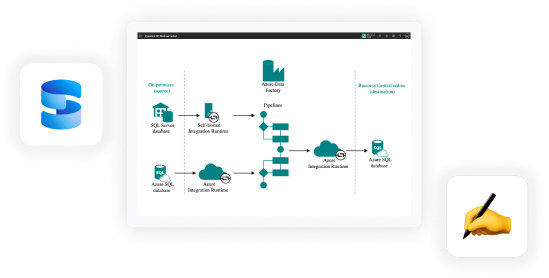
We process master data and item records separately from opening balances, including inventory, cash balances, customer and supplier settlements, and payroll balances. Before migration, we map and clean outdated data. Our experts export data using dedicated scripts as of an agreed date, and transfer the approved scope to the test environment.

The client operates the new system in a test environment. Based on the results, we either proceed directly to production or document the required customizations.

We complete the agreed customizations and confirm that the system is ready for production use. The operational environment is then switched to the new system. CBPM Service consultants work alongside the client’s employees during the first reporting period close, document any issues, and promptly resolve deviations. CBPM’s experts provide ongoing support and maintenance per the SLA.
A full migration from 1C typically takes 6 to 9 months. The timeline depends on the quality of the existing database and the number of unique business processes. Thanks to our Agile implementation methodology, the first modules, such as Sales or Warehouse Management, can go live within 8–12 weeks from project kickoff. These timelines apply to a comprehensive migration covering several functional areas. For each company, we define the timeline individually based on the pre-project assessment.
For a small company, the migration brings finance, sales, and inventory into one cloud system without its own servers or a full-time system administrator. Licenses are paid per user, and Microsoft sets no minimum number of licenses. Ukrainian localization supports VAT accounting, tax invoices, registration in the Unified Register of Tax Invoices (ERPN), and document exchange via M.E.Doc and Vchasno, so familiar accounting operations are preserved. For a medium-sized company, Business Central provides a foundation for growth: accounting for multiple legal entities, multi-currency support, and direct integration with marketplaces and logistics providers through ready-made connectors. For 25 years, our team has worked with 1C and BAS, and also with Microsoft BC, so we transfer master data, balances, and accounting logic with the specifics of both platforms in mind.
Yes. Microsoft Dynamics 365 Business Central supports Ukrainian accounting and tax compliance through localization and system configuration. This enables companies to continue using their existing chart of accounts, document templates, and statutory reporting without maintaining parallel accounting systems or duplicating documents.
No. Business operations do not need to be interrupted. Deployment, customization, and historical data migration are carried out in a dedicated Microsoft Azure test environment. The final transfer of opening balances and user cutover to the production ERP system is completed over a weekend within 24–48 hours, allowing shipping and sales operations to continue without disruption.
The most common issues include incomplete master data, duplicate customer and vendor records, and open transactions from previous years. These are the primary factors that slow down 1C migrations. We address them with automated data validation scripts that clean, validate, and structure the data before the import process begins.
The project budget includes consulting services (business analysis, system configuration, data migration, and user training) as well as Microsoft SaaS licensing costs. All project expenses are estimated during the pre-sales phase and contractually fixed before implementation begins.
First, determine whether the ban on software from the list maintained by the State Service of Special Communications and Information Protection of Ukraine (SSSCIP) applies to the enterprise’s accounting system. The ban covers systems that process state information resources and critical information infrastructure facilities, and a violation identified during a state inspection is grounds for an order to replace the software. The second issue is procurement: if the enterprise is a contracting authority under the Law of Ukraine “On Public Procurement”, the migration scope and requirements for the new system must be described before the tender is announced. Pre-project Discovery produces a technical specification and an estimate accurate to within 10%, which can serve as a basis for procurement.
Leave your contact details and briefly describe your situation, including your current system, number of users, and the issues you would like to resolve.
A 30-minute conversation to discuss your pain points, timeline expectations, and the project delivery approach so we can select the right team for your needs.
Technical audit of the IT architecture, project scope and boundaries, system concept, and preliminary roadmap.
A specific document outlining the scope of work, timelines by stage, and cost.