Reducing In-House IT Infrastructure Costs
Legacy versions of AX require ongoing investment in servers, backups, and system administrators. Migrating to the cloud converts these capital expenditures into predictable monthly licensing costs.
ERP Infrastructure Modernization Without Operational Risks
Planning to reengineer your legacy Dynamics AX (Axapta) system? The CBPM Service team will migrate it to Dynamics 365 Finance. We ensure clean code architecture, preserve historical data for analysis in Power BI, and deliver the project iteratively through Agile sprints.

Official Microsoft Partner
of ERP Automation Experience
Completed Projects Across 12 Industries
BAS and Microsoft Dynamics 365 Business Central
Outdated tools significantly hinder business growth, while modern ERP technologies provide management with complete and transparent control over the company’s finances and resources. This eliminates management delays and accelerates decision-making.
Balance consolidation takes weeks because bank statements are reconciled manually and data is spread across separate spreadsheets. Management doesn’t see the actual cash-flow position until 10–15 days later, after some decisions have already been made.
Automated bank statement imports, instant cost calculation, and a complete financial period close within three days.
Inventory discrepancies, delays in order picking, and a lack of up-to-date data lead to downtime and financial losses. Stocktaking takes weeks, while shortages are often discovered only after a shipment has already been disrupted.
WMS-enabled bin management, automated picking route optimization, and real-time tracking of goods in transit.
When data is transferred manually between Excel spreadsheets, it can be lost or duplicated. No department can be certain that it is working with up-to-date information.
A single source of truth where creating a sales order automatically reserves inventory in the warehouse and generates an invoice without any manual data duplication.
The business owner is forced to personally approve minor payments because the process can’t be trusted. Delegating financial decisions without a reliable control system creates a risk of misuse or errors.
A configurable approval matrix in the Workflow module based on transaction amounts, financial responsibility centers, and expense categories.
Managers spend up to 40% of their working day manually completing repetitive documents. Day-to-day operational tasks consume resources that should be directed toward strategic priorities.
Document templates, automated recurring invoicing, and automatic order creation.
Collecting source documents creates chaos and stress for the accounting team. Data is scattered, some documents are missing, and every audit turns into a stressful project lasting several weeks.
The system is designed from the outset around strict principles of transparent and easy-to-understand financial auditing. Every transaction is fully traceable, and a complete audit trail is generated automatically.
The on-premises database is not designed for large-scale operations. Multi-currency accounting, the simultaneous operation of multiple legal entities, and high transaction volumes lead to system failures and reduced performance.
Automatic horizontal scaling of Azure cloud resources during peak workloads, without performance degradation or intervention from the IT team.
Migration of core financial, manufacturing, and logistics modules from the legacy Microsoft Dynamics Axapta system to a modern cloud platform. The project is delivered with a clean architecture, isolated customizations, and seamless import of the holding company’s opening balances to prevent operational downtime.

General ledger, consolidated reporting for the holding company, multi-currency accounting, and tax process automation.

Supplier relationship management, purchase order automation, invoice verification, and supplier reliability analysis.

Order management, flexible price list configuration, accounts receivable control, and shipment management.

Location-based product storage, inventory level optimization, end-to-end batch tracking, and stockout risk minimization.

MRP-based capacity planning, bill of materials management, and task allocation across production workshops.
Internal transfer coordination, delivery route planning, and complete control over the movement of every shipment.
Real-time budgeting and cost control, labor tracking, project phase planning, and profitability monitoring.
Management of the holding company’s organizational structure, administration of employee records, and tracking of team performance appraisals.
Process: Conducted through two to three meetings with the client, during which we interview stakeholders and identify the key business pain points. Based on our expert assessment, we prepare a list of the required work and present it to the client.
Primary Purpose: Provides a high-level understanding of the project scope needed for the initial decision: which platform to choose and whether to proceed.
Outcome: We provide a preliminary estimate of the project scope, timeline, and budget. At this stage, the figures are indicative, and the actual costs and timelines may differ significantly from the initial forecast.
Duration and Cost: Takes from one day to two weeks and is provided free of charge.
Process:
Primary Purpose: Provides a clear understanding of the project’s actual scope before implementation begins.
Outcome: The estimate has a margin of error of up to 10%, while project costs remain under control. The client receives a validated model of the future system, technical specifications, a project estimate, an implementation schedule, and a roadmap.
Duration and Cost: This is a separate phase completed before the main project. Its cost ranges from 5% to 30% of the overall project budget, depending on the project’s level of complexity and uniqueness.
Challenges in Microsoft Dynamics AX ERP projects are usually related not to the system itself, but to how the implementation process is structured. We have refined this methodology over 25 years and more than 200 completed projects. Here is how it works.

We conduct a series of interviews with users across all areas subject to automation and document the processes and requirements in formal meeting records. We model these processes within the standard system configuration and validate their accurate representation with the client. Based on the Fit-Gap analysis, we identify gaps between business needs and standard functionality, prepare technical specifications, and assess the feasibility of each customization.

After the Discovery phase is completed, CBPM Service specialists present the client with the future system model, technical specifications, project estimate, and implementation approach. We agree on the project schedule and roadmap with the client and the project team before any work begins.

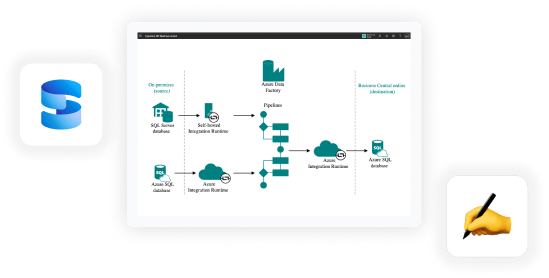
CBPM Service analysts define the list of data objects, migration formats, and transfer sequence, and then align them with the client.
We implement Microsoft Dynamics AX ERP using a sprint-based methodology, with coordination meetings held every two weeks and a mandatory monthly meeting with the project sponsor. This approach ensures effective project control and transparent status reporting at every stage. We develop all customizations in accordance with the approved technical specifications and demonstrate the completed functionality to the client.

We provide initial training for the client’s team so that users can work with the system and test it using their own business processes.

We process master data and product catalogs separately from opening balances, including inventory, cash balances, customer and supplier settlements, and payroll. Before migration, we map the data and remove outdated records. We export the data as of a specified date using dedicated scripts and transfer the agreed scope of data to the test database.

The client works in the new system during the user acceptance testing phase. Based on the results, we either proceed directly to production or document a list of required refinements.

We complete the agreed customizations and confirm the system’s readiness for production, after which we switch the operational environment to the new system. CBPM Service consultants work alongside the client’s team during the first reporting period close, identify any issues, and resolve them promptly. We then provide ongoing support and maintenance in accordance with the agreed SLA.
The legacy code cannot be copied directly because the system architectures are fundamentally different. However, we conduct a detailed audit to recreate all valuable business logic. We rebuild every necessary customization previously used in your Axapta or Dynamics AX system from scratch as a clean, isolated extension.
The project timeline always depends on the size of the holding company and the number of modules involved. Using the Agile methodology, we divide the work into clear two-week sprints. This allows the client’s team to review completed results gradually while minimizing the overall cloud implementation timeline.
Before signing the agreement, we conduct a thorough business analysis and define a clear scope of work. A fixed price means that we assume responsibility for any additional internal costs or technical complexities. You pay only the budget approved at the beginning of the project.
No. Your business will continue operating as usual. The main preparation, including duplicate removal from master data and integration configuration, is completed in parallel within a test environment. We perform the final migration of current balances over the weekend, allowing the team to begin working in the new ERP system on Monday.
We fully preserve all accumulated information. We connect Power BI directly to the archived Microsoft Dynamics Axapta database, providing convenient access to all historical reports and transactions without overloading the new cloud system.
Leave your contact details and briefly describe your situation, including your current system, number of users, and the issues you would like to resolve.
A 30-minute conversation to discuss your pain points, timeline expectations, and the project delivery approach so we can select the right team for your needs.
Technical audit of the IT architecture, project scope and boundaries, system concept, and preliminary roadmap.
A specific document outlining the scope of work, timelines by stage, and cost.