Operational accounting of production processes had not been established, so management did not receive real-time data on production results. Management decisions were made without an up-to-date view of the current state of operations.
Management reporting and planning • Operational accounting
End-to-end production, warehouse, and financial accounting: how an ERP system unified management at the Kostopil Glass Factory
The Kostopil Glass Factory employs 500–800 people. Our team implemented operational, accounting, and financial management based on an ERP system that brought production, warehousing, budgeting, treasury, and management reporting into a single environment. Thanks to more accurate planning, the factory’s production capacity is now utilized at nearly 100%.
📊 End-to-end operational accounting was launched
for production and finished goods warehousing
🧾 A budgeting and treasury system was implemented
with approval workflows for management decisions
📈 A management reporting builder was created
for flexible analysis across multiple dimensions
Customer situation before the project
The plant manufactures glass products, and every percentage point of production capacity utilization directly affects business performance. Without a unified planning and accounting system, the company could not allocate available resources to actual demand as precisely as its production capabilities allowed.
Production planning was not based on a unified system that could take both the sales plan and the actual availability of production capacity into account. As a result, the plant could not optimally allocate available resources to meet product demand.
Finished goods warehouse accounting did not provide real-time tracking of product movements. This made it more difficult to use storage space efficiently and dispatch products from the warehouse quickly.
The project had to cover eight accounting and operational areas — from statutory and financial accounting to production planning, warehouse accounting, and management reporting — while ongoing production processes could not be interrupted. The transition from the old system to the new one was carried out gradually, with maximum involvement of plant employees at every stage.
Objectives and critical requirements
The client’s request involved building a unified ERP system covering operational, statutory, and financial accounting, with a phased implementation that would not interrupt the company’s ongoing processes.
1. Operational accounting of production processes

Ensure continuous production monitoring within the system so that management decisions can be made based on up-to-date data.
2. Production planning

Create a planning system that takes into account the sales plan and production capacity to meet product demand efficiently.
3. Finished goods warehouse accounting

Ensure efficient receipt and dispatch of finished goods to make better use of warehouse space.
4. Phased implementation without stopping production

Migrate accounting to the new system gradually while maintaining continuity of ongoing production processes and involving key plant employees at every stage.
5. Flexible approach to reporting

Enable the creation of management reports in flexible formats for analyzing business performance across different areas.
What our team did and how
Operational accounting of production processes
We built an operational production accounting system that takes into account the specifics of production capacity, work centers, and equipment reconfiguration when switching between products.
Most system objects were developed from scratch because the plant’s production processes required multiple influencing factors to be taken into account simultaneously.
The production team gained the ability to enter and analyze operational data in real time — something that had not previously been available in any of the company’s systems.

Production planning
We created an environment for building production plans based on the sales plan and actual available capacity, with subsequent comparison of planned indicators against actual operations.
As a result, the plant can allocate available resources according to real demand instead of reacting after the fact. Today, the plant’s production capacity is utilized at nearly 100%.

Finished goods warehouse accounting and barcoding
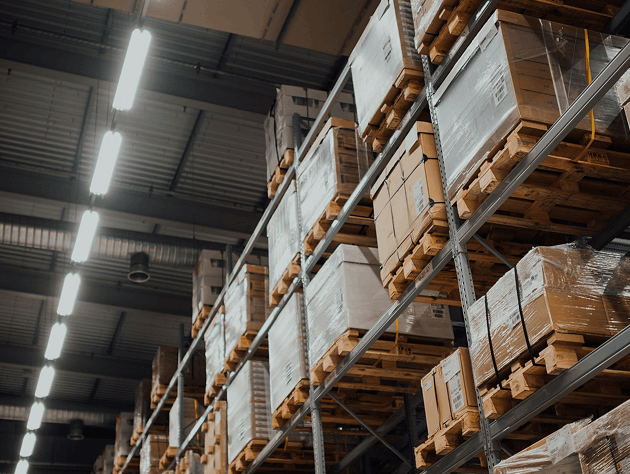
We implemented a system for generating and using barcodes for finished goods together with operational warehouse accounting, ensuring accurate tracking of product movements within the warehouse.
Goods can now be received and dispatched faster thanks to more efficient use of storage locations.
Budgeting and plan-vs-actual analysis
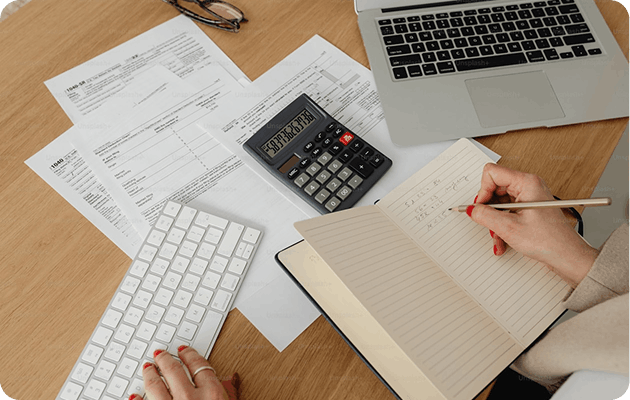
We implemented a budgeting system by business area and reporting period, supplemented with tools for comparative analysis of planned and actual expenses.
The company can now track spending by business area in a single environment instead of relying on fragmented calculations.
Treasury and approval workflows
We created from scratch an environment for building and configuring approval workflows for management decisions related to the use of cash and other resources, using existing system documents as approval objects.
The main challenge was to make the solution flexible enough to work simultaneously across different responsibility centers and business areas.
As a result, the company received a unified system for building, configuring, and executing management approval workflows under consistent rules across the entire organization.

Management reporting: flexible report builder
We created a dedicated environment for building and configuring management reports using existing master data, documents, and system registers as data sources, and developed a flexible report builder from scratch. The main challenge was enabling data from different sources to be combined within a single report using different analytical dimensions and grouping levels.
Management can now create reports in flexible formats for specific business needs instead of being limited to predefined templates.

What the client can do now that was not possible before the project
Approve management decisions through unified approval workflows, regardless of the business area or responsibility center.
Plan production and product sales within a single system that takes into account both the sales plan and actual production capacity.
Monitor operational accounting at every stage of the production cycle, from manufacturing to warehousing.
Create management reports in flexible formats for specific analytical needs instead of relying on predefined templates.
Receive and dispatch finished goods from the warehouse more efficiently using barcoding.

Accounting and financial management
We implemented accounting tailored to the plant’s specific operations, including consolidated reporting and period-end closing, as well as a system for building and configuring financial reports with flexible financial analysis capabilities.
Both accounting areas became part of a unified system together with operational production and warehouse accounting.
Working with the client’s team
The plant’s project team included key employees from the main business areas: accounting, production, economics, sales, and warehousing. The client also appointed a dedicated project manager, which made it possible to clearly distribute responsibilities, set deadlines for tasks, and assign accountable team members for each stage.
Interaction between the teams was organized through regular internal and joint meetings, in-person meetings with the client, as well as day-to-day communication by email and phone. System support continues during production operation after the implementation has been completed.

Results
Production and planning

Thanks to a planning system that takes into account both the sales plan and actual capacity availability, the plant’s production capacity is now utilized at nearly 100%, compared with uneven utilization before the system was implemented.
Warehouse

The speed of receiving and dispatching finished goods increased thanks to barcoding and operational warehouse accounting.
Management analysis

Management gained access to real-time operational analysis of company performance, improving the basis for management decision-making.
Daily operations

The use of supporting accounting tools outside the system has been minimized, including Excel files, external spreadsheets, and notes. Operations have become more structured, and the number of errors has decreased.
New capabilities

The company gained tools for analyzing operations, controlling the use of funds and resources, and making more efficient use of production capacity.