
Sales, accounting, and reporting were distributed across incompatible tools with no automated data exchange. Any expansion of the retail network required manual duplication of operations across several systems at once.
LS Central • International retail network • Consignment
Implementation of a retail network based on LS Central for stores in four countries
The main objective for the CBPM Service team was to build a retail environment based on LS Central and Business Central for stores in Spain, Ukraine, the Netherlands, and Poland, with each location having its own fiscal and operational requirements. The solution had to simultaneously support local accounting, POS transactions, cross-border consignment processes, and data transfer to the central management database.

📑 7 stores launched
The system is ready to scale, with expansion into 4 additional jurisdictions planned
📉 Unified processes
Standardized POS processes while preserving the local fiscal requirements of each country
🕐 Fiscalization enabled
Cash register transactions in Ukraine are fiscalized automatically through Checkbox (PRRO)
Before the project: a retail network without a unified operational environment
Stores in different countries did not share a common POS platform or unified cash register process standards. Data was not transferred automatically between locations, while each country’s fiscal requirements were handled separately and outside the overall system environment.
None of the existing systems supported local regulatory requirements in an automated way. This meant fiscal operations had to be handled manually, creating a constant risk of discrepancies in reporting.
Cross-border movement of goods without transfer of ownership was handled outside the automated accounting environment. Accurately reflecting these transactions in reporting was not possible with the existing infrastructure.
Objectives and critical requirements
The client requested the development of a retail POS environment based on LS Central and Business Central for several countries at the same time, each with its own fiscal, regulatory, and operational requirements.
1. LS Central POS in local environments

A critical requirement was the implementation of LS Central POS in local Business Central databases to support store operations while preserving the particular process and accounting requirements of each location. For Spain, future requirements related to SII, E-Invoicing, and VeriFactu were also taken into account as regulatory frameworks.
2. Local regulatory and fiscal accounting

One of the key requirements was support for local regulatory accounting in different countries, including fiscalization in Ukraine through Checkbox/PRRO, as well as Spanish localization, electronic invoicing, VAT, and Intrastat/ESL requirements for ES-NL consignment scenarios.
3. Cross-border consignment processes

It was important for the client to support consignment scenarios for stores within EU countries: movement of goods without transfer of ownership, recording the sale to the end customer, and automatic generation of the corresponding documents between databases.
4. Cash register and retail processes at points of sale

Another important task was the complete configuration of POS scenarios, including receipt print forms, acquiring setup, and alignment of cash register processes with the operational standards of each store.
5. Cross-platform system access

A key requirement was cross-platform accessibility through a browser on major operating systems, including Windows, macOS, iOS, and Android, from different devices such as workstations, tablets, and smartphones.
6. Operational simplicity for store teams

Given the varying levels of technical proficiency among store managers, the solution had to be both functional and sufficiently easy to use in daily operations without requiring advanced technical skills on site.
What the CBPM Service team did and how
Architectural solution: local databases and a central environment
The architecture includes separate local Business Central databases for Spain, Ukraine, and the Netherlands, each operating as an independent operational and fiscal environment. LS Central POS was deployed within these databases, so POS transactions are recorded directly in the relevant local database in accordance with local accounting and fiscal requirements. Through API-based exchanges, the local databases transfer data to the central MAIN database, where a consolidated management view of the entire retail network is formed.

LS Central
LS Central was selected as a solution embedded directly within Business Central rather than as a separate POS system. It extends the existing ERP instead of operating as a standalone application, eliminating the need for additional integrations, data exchanges, and replication between systems, the areas where data loss, errors, and synchronization failures most commonly occur.
All processes take place within a single system: goods receipts, transfers, inventory balances, and sales use shared master data and are updated in real time. Any external POS system would require additional data exchange between databases, while LS Central removes this integration layer entirely.
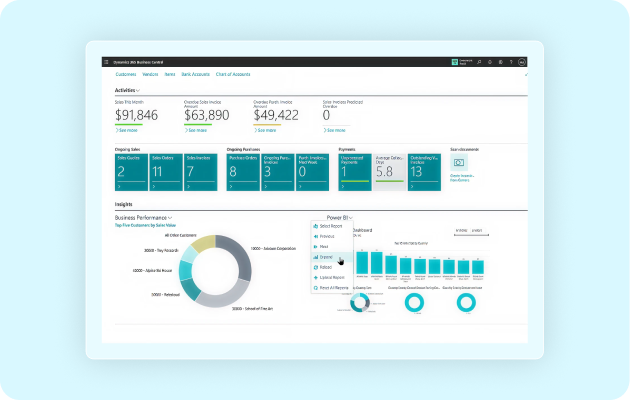
Fiscalization for Ukraine: integration with Checkbox (PRRO)
The Ukrainian location required full fiscalization of payment transactions. The client selected Checkbox, a software-based fiscal cash register solution (PRRO).
Standard LS Central functionality does not include an integration mechanism for Checkbox, so a custom solution was developed to cover all required fiscal events: cash register authorization, opening and closing shifts, cash register status, generation of fiscal receipts, and X and Z reports. Each event is logged with its control status, providing full visibility into the integration and enabling rapid identification of compliance issues in the fiscal chain. A separate acquiring integration was also configured to support cashless payments at the POS.

Consignment scenario across EU countries
The consignment model within EU countries required a custom approach. Goods are physically transferred to a store in another country, while ownership changes only when the item is sold to the end customer.
To reflect this process correctly, synchronization between databases was implemented: transfer to a consignment warehouse without a change of ownership, recording of the final sale, and automatic creation of internal documents between databases. Intrastat and ESL reporting requirements for consignment transactions are also taken into account.
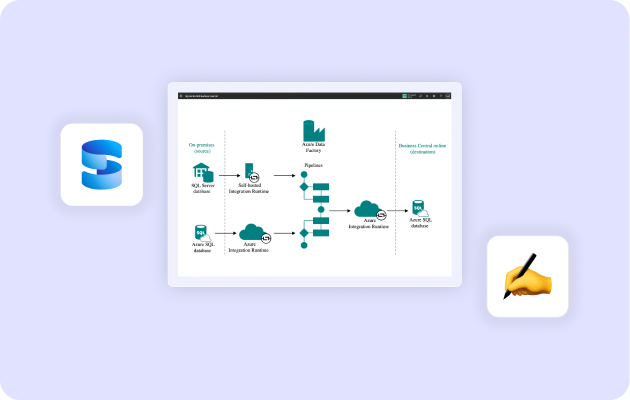
Standard functionality and customization
Customizations were focused only on areas where standard functionality could not cover specific requirements: fiscal integration with Checkbox, intercompany consignment logic between databases, receipt print forms, mappings for inter-database APIs, and data exchange logging.
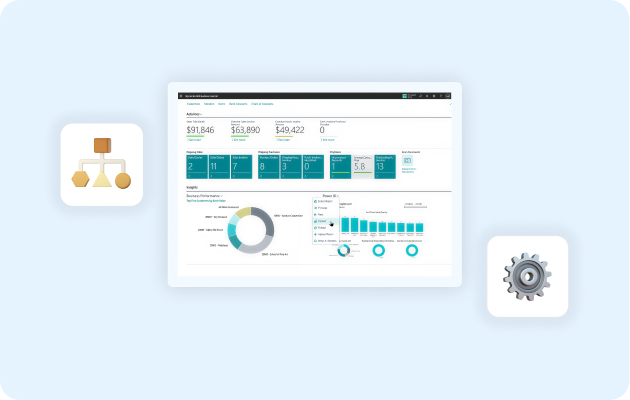
Custom technical solutions
Fiscal workflow through APIs

Integration with Checkbox/PRRO requires precise management of cash register events at the individual transaction level: authorization, shift operations, receipt generation, and X/Z reports. Each event is handled as a separate API call with its own status and logging. This makes it possible not only to transmit receipts, but also to monitor the entire fiscal workflow in real time.
Consignment through synchronized databases

In standard ERP logic, consignment is usually treated as movement between warehouses within a single system. In this project, it spans two separate Business Central databases in different jurisdictions, where transactions have different fiscal treatment. The solution synchronizes the status of consignment inventory between the databases and automatically triggers the creation of the required documents when a sale occurs.
Scalable architecture for new locations

The current architecture supports the addition of new stores, including boutiques in Madrid (a second location), Kyiv, Poland, the Netherlands, and Budapest, without rebuilding the core system environments. Each new location can be connected to the existing architecture with its own local fiscal configuration. The system is ready to scale, with expansion into 4 additional jurisdictions planned.
Implementation approach
The implementation was carried out in stages:
- first, the architecture of the local databases was configured and the integration flows between them were defined;
- then, POS configuration and fiscal integrations were implemented for each location;
- in parallel, custom components were developed for Checkbox, consignment processes, and inter-database data exchange.

Working with the client’s team
One of the key factors in completing the project within the required timeframe was the client’s appointment of a responsible project manager with decision-making authority. This ensured fast communication, timely approval of architectural and technical issues, and effective coordination between the client and implementation teams.

What changed in numbers
Metric
Scalability
Localization
Fiscalization
Consignment
Integrations
Before
Retail stores in different countries without a unified POS platform
Each country’s fiscal requirements were supported separately and manually
Cash register operations in Ukraine without automated fiscalization
Consignment between stores in EU countries without automated accounting
Manual data entry and non-transparent data exchange between systems
After
Seven boutiques launched into production on a single platform
A unified POS approach while preserving each country’s local fiscal requirements
Checkbox (PRRO) connected: receipts and reports are generated automatically
Consignment operations managed within a unified accounting environment
Controlled API-based data exchange with error logging
Data from local databases is transferred to the central MAIN database for management reporting across the retail network.
New locations can be connected within the existing architecture without rebuilding the core system environments.
The status of every data exchange, fiscalization event, and API call is monitored through dedicated logs.