
Transition to New ERP Standards: Multi-Platform Support and Automatic Updates

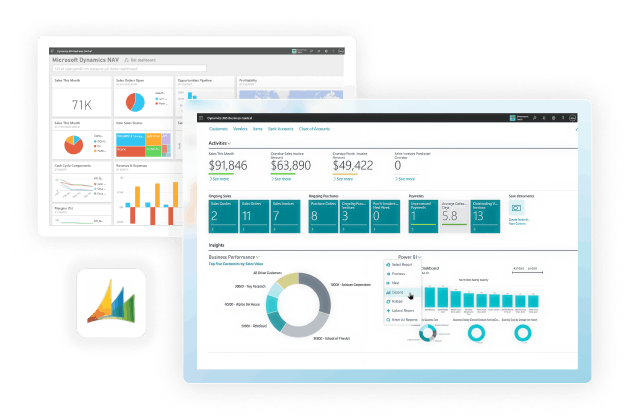
Upgrade from NAV (Navision) to Microsoft Dynamics 365 Business Central

Professional upgrade of Microsoft Navision to the latest version of Microsoft Business Central by an official partner. CBPM Service experts ensure clean system architecture, official localization, and full team support after a successful launch.

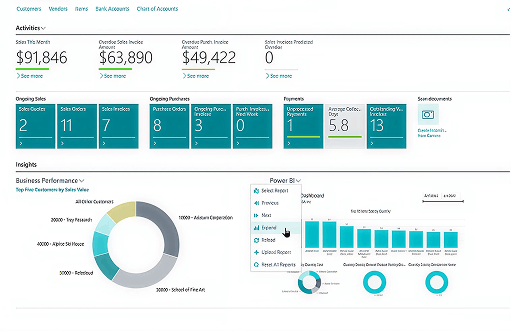
Microsoft Dynamics 365 Business Central dashboard

Official Microsoft Partner

25 Years

of ERP Automation Experience

200+

Completed Projects Across 12 Industries

Hybrid Expertise

BAS and Microsoft Dynamics 365 Business Central

Why companies migrate from NAV (Navision) to Business Central

Migrating from classic NAV (Navision) to Microsoft Dynamics 365 Business Central means moving from outdated on-premises servers to flexible cloud technologies. Businesses choose to upgrade to eliminate support complexity, gain automatic updates, modern Power BI analytics, and full mobility without risking data loss.

Secure cloud instead of outdated servers

On-premises NAV servers limit mobility and require significant spending on hardware and administration. Business Central operates in the cloud and can be accessed from anywhere in the world, providing reliable access, Microsoft-level data security, and uninterrupted business processes.

Automated updates without disruption

Older versions of Navision are difficult and expensive to update because of layers of custom code. In the new ERP system, the core remains clean, while all custom solutions are implemented as separate extensions, allowing the platform to update automatically.

Integration with the Microsoft 365 ecosystem

The Edit in Excel feature lets you update large volumes of working data in a familiar interface, with the results automatically imported into the General Ledger without the risk of formula errors. Outlook and Teams work as a unified environment with Business Central: contact details and customer information are available directly in emails or chats without opening the ERP system.

Business scaling without architectural limitations

Legacy software slows down company growth. Business Central architecture is designed for rapid scaling: you can easily add new legal entities, branches, warehouses, or currencies without rewriting the core system logic.

What motivates Ukrainian businesses to look for new ERP solutions

Outdated tools significantly slow down company growth, while modern ERP technologies provide management with complete and transparent control over the company’s finances and resources. This helps eliminate management delays and accelerate decision-making.

Request a Technical Audit

Problem

Balance consolidation takes weeks because bank statements are reconciled manually and data is spread across separate spreadsheets. Management doesn’t see the actual cash-flow position until 10–15 days later, after some decisions have already been made.

What Business Central Provides

Automated bank statement imports, instant cost calculation, and a complete financial period close within three days.

Problem

Inventory discrepancies, delays in order picking, and a lack of up-to-date data lead to downtime and financial losses. Stocktaking takes weeks, while shortages are often discovered only after a shipment has already been disrupted.

What Business Central Provides

WMS-enabled bin management, automated picking route optimization, and real-time tracking of goods in transit.

Problem

When data is transferred manually between Excel spreadsheets, it can be lost or duplicated. No department can be certain that it is working with up-to-date information.

What Business Central Provides

A single source of truth where creating a sales order automatically reserves inventory in the warehouse and generates an invoice without any manual data duplication.

Problem

The business owner is forced to personally approve minor payments because the process can’t be trusted. Delegating financial decisions without a reliable control system creates a risk of misuse or errors.

What Business Central Provides

A configurable approval matrix in the Workflow module based on transaction amounts, financial responsibility centers, and expense categories.

Problem

Managers spend up to 40% of their working day manually completing repetitive documents. Day-to-day operational tasks consume resources that should be directed toward strategic priorities.

What Business Central Provides

Document templates, automated recurring invoicing, and automatic order creation.

Problem

Collecting source documents creates chaos and stress for the accounting team. Data is scattered, some documents are missing, and every audit turns into a stressful project lasting several weeks.

What Business Central Provides

The system is designed from the outset around strict principles of transparent and easy-to-understand financial auditing. Every transaction is fully traceable, and a complete audit trail is generated automatically.

Problem

The on-premises database is not designed for large-scale operations. Multi-currency accounting, the simultaneous operation of multiple legal entities, and high transaction volumes lead to system failures and reduced performance.

What Business Central Provides

Automatic horizontal scaling of Azure cloud resources during peak workloads, without performance degradation or intervention from the IT team.

Migration of core NAV modules to Business Central

We move finance, warehousing, logistics, and manufacturing from Microsoft Dynamics NAV (Navision) to modern Business Central without disrupting business operations. We preserve clean system architecture, configure ready-to-use Ukrainian localization, and migrate final balances within 1 – 2 days.

Finance and accounting

Business analytics bar chart icon

General Ledger, tag-based analytics without overcomplicating the chart of accounts, Excel import, and ready-to-use Ukrainian localization.

Procurement and supplier management

Receipt document icon

Automated purchasing based on inventory levels, price control, settlement of outstanding balances, and demand forecasting.

Sales and customer management

Cardboard shipping box icon

End-to-end workflow from quotation to shipment, accounts receivable control, and automatic margin calculation.

Warehouse and inventory management

Manufacturing factory icon

Location-based storage, inventory optimization, stocktaking without warehouse downtime, and complete batch and serial number tracking.

Manufacturing and resource planning

Shopping cart icon

Bill of Materials (BOM) calculation, capacity planning (MRP), cost control, and production scheduling.

Customer relationship management

Business analytics bar chart icon

Sales pipeline control, interaction history, customer database segmentation, and full one-click synchronization with Outlook.

Project and service management

Receipt document icon

Labor cost tracking, timeline planning, sprint tracking, budget control, and service management.

Logistics and supply chain management

Cardboard shipping box icon

Route optimization, transparent shipment tracking, carrier integrations, and reduction of logistics costs.

Complete analytics in Power BI

We preserve 5–10 years of historical data without overloading the ERP system. We connect Power BI dashboards directly to the archived NAV or 1C database. This makes it possible to compare Plan vs. Actual figures for previous periods without reducing the performance of the new system.

Planning to migrate from NAV to a modern ERP system?

Migrate from NAV to a modern, world-class ERP platform with support for Ukrainian accounting and tax requirements.

Assess Your Readiness to Migrate
  • Data and business logic preservation

  • Parallel operation of both systems during migration

  • Team training included

Pre-project assessment in two formats

Rapid Assessment

Process: Conducted through two to three meetings with the client, during which we interview stakeholders and identify the key business pain points. Based on our expert assessment, we prepare a list of the required work and present it to the client.

Primary Purpose: Provides a high-level understanding of the project scope needed for the initial decision: which platform to choose and whether to proceed.

Outcome: We provide a preliminary estimate of the project scope, timeline, and budget. At this stage, the figures are indicative, and the actual costs and timelines may differ significantly from the initial forecast.

Duration and Cost: Takes from one day to two weeks and is provided free of charge.

Request an Assessment
Business analytics and financial dashboard

Pre-Project Discovery

Process:

  • We run a series of interviews with users across every area subject to automation, documenting each meeting;
  • We build and present the target model using the client’s real examples, combining the client’s actual business processes with the standard functionality of Microsoft Navision and future subsystems;
  • We conduct a Fit-Gap analysis to find areas where standard functionality does not meet the requirements;
  • We prepare a technical specification for each required customization;
  • We produce the final project estimate.

Primary Purpose: Gives an understanding of the project’s real scope before it starts.

Outcome: The accuracy of this estimate is high: the margin of error does not exceed 10%, and cost remains under control. The client receives a validated model of the future system, a technical specification, a project estimate, an implementation schedule, and a roadmap.

Duration and Cost: A separate phase that precedes the main project; cost ranges from 5% to 30% of the budget, depending on the project’s uniqueness.

Request an Assessment
Business software support interface

Methodology and stages of Microsoft NAV implementation

In the vast majority of ERP projects, the problem lies not in Microsoft Dynamics NAV software itself, but in the implementation approach. Our methodology has been developed over 25 years and is based on experience from more than 200 completed projects — here is how it works.

1. Pre-project assessment

Search and data analysis icon

We conduct a series of interviews with users across every area that requires automation and document processes and requirements in formal records. We model the processes using the standard system configuration and validate their accuracy together with the client. Based on the Fit-Gap analysis, we identify where business needs differ from standard functionality, then prepare the technical specification and assess the feasibility of each customization.

2. Project schedule and roadmap

Office printer icon

Once the Discovery phase is complete, CBPM Service specialists present the client with the model of the future system, the technical specification, project estimate, and implementation approach. We agree on the project schedule and roadmap with the client and the project team before implementation begins.

3. Migration scope alignment

Digital transformation magic wand icon

CBPM Service analysts define the list of objects to be migrated, as well as the format and sequence of the migration, and then agree on these with the client.

4. Configuration and development

Business analytics bar chart icon

Implementation follows a sprint-based methodology: coordination meetings are held every two weeks, while a monthly meeting with the project sponsor is mandatory. This approach ensures controllability and transparent project status at every stage. All customizations are carried out strictly in accordance with the approved technical specification, and we demonstrate the completed functionality to the client.

5. Initial training

Training and education icon

We provide initial training for the client’s team, enabling users to start working in the system and test it using their own real business processes.

6. Migration to the test database

Computer workstation icon

We process master data and product catalogs separately from balances: inventory, cash-related liabilities, settlements with customers and suppliers, and payroll. Before migration, the data is mapped and cleaned of outdated information. Export is performed using dedicated scripts as of a specified date, after which the agreed data scope is transferred to the test database.

7. Test operation and refinement

Business partnership handshake icon

At this stage, the client works in the new system in test mode. Depending on the results, we either proceed directly to production operation or prepare a list of required refinements.

8. Production launch and support

Air travel and transportation icon

We implement all agreed refinements and confirm that the system is ready for production operation, after which the operational environment is switched to the new system. During the first reporting period close, CBPM Service consultants work side by side with the client’s team, identifying and promptly resolving any issues. Ongoing support and maintenance are then provided in accordance with the SLA.

Projects we’re proud of

Over 200 successful implementations across industries and businesses of different sizes.
95% of our clients recommend us. 25 years of experience.

View All Case Studies

Migration from NAV to Business Central without chaos: the CBPM Service approach

We help you migrate to Business Central following a clear CBPM Service implementation framework. No chaos from “endless rework”: we break the project into transparent Agile stages, conduct a rigorous Fit/Gap analysis at the start, and launch the upgraded system without disrupting business operations.

Agile sprints for NAV migration

Iterative delivery of functionality, step-by-step development control, and transparent demonstration of results.

Business analysis before migrating from NAV

Process assessment, AS-IS model development, and Fit/Gap analysis to define the scope of modifications and create a preliminary roadmap.

ERP and business expertise

Deep understanding of industry-specific processes in manufacturing, logistics, and distribution for accurate ERP optimization.

Experience in ERP modernization

More than 200 projects involving legacy architecture reengineering and migration to modern platforms.

25+ years of ERP implementation experience

Unique hybrid expertise for the secure migration of complex business logic without losing historical data.

Post-launch Business Central support

System support during the Go-Live stage, process stabilization, and SLA-based support after successful implementation.

Expertise in Microsoft solutions

Official certified partner status, architecturally clean solutions, and Power BI integration.

What Determines the Success of an ERP Project: Shared Responsibility for the Outcome

Project success largely depends on several conditions on the client’s side, and we discuss them in advance, before the project begins, to keep implementation within the agreed budget and timeline. Each of these conditions is based on lessons learned from previous projects and has helped clients avoid unnecessary costs.

Responsible Persons and Roles

A project team is formed on the client’s side and must include a key user and a project sponsor. Roles should be clearly defined: who is responsible for the budget, who makes decisions regarding scope expansion, and who is directly responsible for completing specific tasks.

Coordination Meetings

Regular coordination meetings ensure that both parties share the same understanding of the project status, both in terms of budget and individual workstreams. Status meetings are held every two weeks, while a monthly meeting involving the project sponsor is used to align on the overall status and future direction.

Project Management

Our methodology always allocates dedicated time and budget for project management, including planning, execution monitoring, and meeting documentation. This ensures that tasks remain under continuous control and deadlines are met. From the technical side, we support the project through structured procedures: recording configuration changes and managing software releases.

Combining a Sprint-Based Approach with These Conditions Is What Makes the Project Successful

Client-Side Resource Allocation

We develop and agree on a resource allocation plan for the client’s specialists, and adherence to this plan is mandatory. The document specifies which specialist must be allocated and what percentage of their working time, for example 50%, is required during a particular month. This helps prevent team downtime and keeps the project on schedule.

Client Team Motivation

The client approves an internal document describing an incentive system for its project team based on achieved results. In practice, projects are implemented much more effectively when the client’s internal team clearly understands how its motivation is tied to the outcome.

Deadline Discipline

If the client delays the agreed schedule by more than 30 days due to reasons on its side, the cost of subsequent work automatically increases by 30%. The purpose of this rule is to keep the project within the agreed budget, scope, and timeline.

Downtime Compensation

If the implementation team experiences downtime due to the client, this time is compensated at a coefficient of 0.7 of the previously planned workload. The team is assigned specifically to this project, and its time is reserved in advance.

Mutual Guarantees from the Implementation Partner

When the client accepts the obligations listed above, we in turn guarantee compliance with the agreed deadlines. Otherwise, reciprocal penalties apply. This is an example of symmetrical responsibility designed not to generate additional revenue, but to keep the project within the agreed budget, scope, and timeline.

Looking for an alternative to NAV?

Demand for migration from NAV to international platforms continues to grow, and Business Central is one of the most popular migration options.

Book a 30-Minute Consultation
  • Data and business logic preservation

  • Parallel operation of both systems during migration

  • Team training included

Tell Us About Your Project

    We respond within
    24 hours on business days

    1. Inquiry

    Leave your contact details and briefly describe your situation, including your current system, number of users, and the issues you would like to resolve.

    2. Introductory Call with a Manager

    A 30-minute conversation to discuss your pain points, timeline expectations, and the project delivery approach so we can select the right team for your needs.

    3. Pre-Project Discovery

    A technical audit of your IT architecture, definition of the project scope and boundaries, development of the system concept, and preparation of a preliminary roadmap.

    4. Proposal

    A detailed document outlining the scope of work, timeline for each project stage, and estimated cost.

    Frequently Asked Questions

    Yes. The process includes a full audit of the legacy NAV system and a Fit/Gap analysis. All unique business logic and critical process modifications are isolated and migrated into separate cloud extensions, preserving the architectural cleanliness of the new ERP platform.

    The Microsoft Dynamics NAV (Navision) modernization project is divided into AS-IS process diagnostics, data cleansing, deployment of a cloud environment with Ukrainian localization, testing (UAT), and training. Functionality is delivered iteratively through two-week Agile sprints.

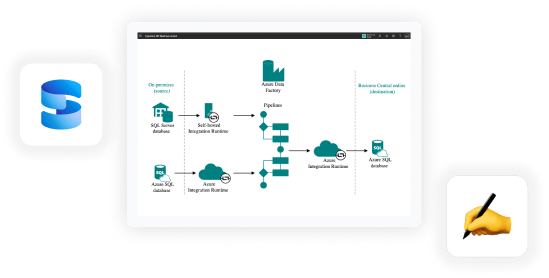
    No. The main architecture deployment, integration gateway configuration, and migration of functional modules are performed in the background. Final conversion and import of balances are completed within 48 hours over a weekend, preventing downtime in the company’s business processes.

    Implementation is based on a Clear price/scope approach. The scope of work and budget are clearly fixed before development begins during the pre-sales analysis stage. Ongoing sprint budget control and deviation monitoring are carried out by the Coordination Committee based on transparent reports from the implementation team.

    To avoid overloading the new ERP system’s memory, we use a hybrid approach. All historical data for the previous 5–10 years is preserved. Power BI dashboards connect directly to the archived Microsoft Navision database, enabling comparative Plan vs. Actual analysis.